
Jim Brown presents on this webcast sponsored by Oracle and Kalypso. The webcast introduces a new pre-configured PLM offering aimed at helping food and beverage companies better implement PLM. View a Replay of the Event
- Executive Overview
- Furthering Service Value with Mobile Technology
- Tie the Field to the Business
- Remove Paper from the Process
- Mobile Technology Enables Better SLM
- Mobile Technology Furthers the Benefits of SLM
- Taking SLM Mobile
- Mobile Apps - Not Backoffice Applications Taken on the Road
- Living Within the Reality of Mobile Constraints
- Get the Right Partner
- Summary
- About the Author
 Successful PLM Programs: Maximizing Business Value through a Phased PLM Strategy reviews the characteristics of a phased approach for manufacturers to meet their PLM objectives, highlighting some relevant, successful PLM Programs.
Click here to read the full report, thank you to our sponsor Dassault.
Table of Contents
Successful PLM Programs: Maximizing Business Value through a Phased PLM Strategy reviews the characteristics of a phased approach for manufacturers to meet their PLM objectives, highlighting some relevant, successful PLM Programs.
Click here to read the full report, thank you to our sponsor Dassault.
Table of Contents
- Introduction
- An Incremental Approach to Strategic Value
- The PLM Program
- Potential PLM Projects – Phasing by Business Improvement
- Potential PLM Projects – Phasing by Organization
- Unexpected Benefits
- Launching the PLM Program
- Recommendations
- Summary
- About the Author
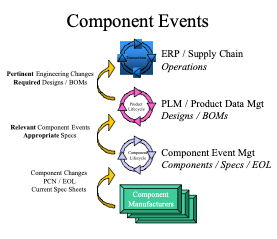 Living with the Dynamics of Electronic Components: The Importance of Component Event Management in a PLM Strategy discusses the inherent challenge of managing product lifecycles for products that contain electronic components, given that the components often have shorter lifecycles than the parent products. Introduces the concept of Component Event Management (CEM) to combat component obsolescence.
Click here to read the full report, thank you to our sponsor IHS.
Table of Contents
Living with the Dynamics of Electronic Components: The Importance of Component Event Management in a PLM Strategy discusses the inherent challenge of managing product lifecycles for products that contain electronic components, given that the components often have shorter lifecycles than the parent products. Introduces the concept of Component Event Management (CEM) to combat component obsolescence.
Click here to read the full report, thank you to our sponsor IHS.
Table of Contents
- Executive Overview
- Product and Component Lifecycles - The Disconnect
- The Impact of Component Events
- The Fuses Have Been Lit
- The Windows of Opportunity Are Closing
- Enter Component Event Management
- Implementing Component Event Management
- Recommendations
- Conclusion
- About the Author
 Mass Customization of Highly Configurable Products: Designing, Selling and Producing “Simple” Products discusses the challenges that mass customization places on manufacturing companies. Describes how customization makes seemingly "simple" products complex to design, sell and produce.Please enjoy the free Executive Summary below, or click the report title above to download the full PDF (free of charge, no registration required).
Executive Overview
Imagine walking into a car showroom and saying “I want the late model sedan, but please give it to me with 4 more inches of legroom in the front, the tachometer moved to the left of the dash, and with an additional trunk release lever on the passenger side”. What you would find is that the automotive industry, while they offer many features and options on their products, has significant limitations in providing truly customized products. But these types of requests are commonplace for highly configurable products like windows, doors, kitchen or bath cabinets, office furniture and even some industrial equipment like hydraulic valves. It seems counter-intuitive, but the process of selling, designing, and producing what appear to be “simple” products becomes surprisingly complex when manufacturers introduce high levels of customization. And demand for customization is on the increase.
As Pine, Pepper and Rodgers said in a Harvard Business Review article in 1995, “Customers … do not want more choices. They want exactly what they want – when, where, and how they want it ... ”. This comment highlighted the increasing demand for products that are highly tailored to meet specific customer demands. This concept provided the motivation for many manufacturers to re-engineer sales and marketing processes to offer more customized products to their customers. The article highlighted increased production flexibility and more advanced design tools as key enablers of this concept. But the ability for manufacturers to meet demands for highly customized products, sometimes known as “mass customization”, varies greatly depending on the company’s ability to bridge the gap between selling a customized product and being able to produce it rapidly and cost effectively. Some industries are delivering mass customized products today, but those that do are struggling with manual and inefficient processes to bring together the configured sales process and the design and production of the configured item.
This paper explores opportunities for manufacturers to improve their competitiveness and profitability based on their ability to effectively provide customized products – products that can be delivered in a large number of variations or configurations - at cost levels comparable to mass production. The paper tries to answer the following questions:
Mass Customization of Highly Configurable Products: Designing, Selling and Producing “Simple” Products discusses the challenges that mass customization places on manufacturing companies. Describes how customization makes seemingly "simple" products complex to design, sell and produce.Please enjoy the free Executive Summary below, or click the report title above to download the full PDF (free of charge, no registration required).
Executive Overview
Imagine walking into a car showroom and saying “I want the late model sedan, but please give it to me with 4 more inches of legroom in the front, the tachometer moved to the left of the dash, and with an additional trunk release lever on the passenger side”. What you would find is that the automotive industry, while they offer many features and options on their products, has significant limitations in providing truly customized products. But these types of requests are commonplace for highly configurable products like windows, doors, kitchen or bath cabinets, office furniture and even some industrial equipment like hydraulic valves. It seems counter-intuitive, but the process of selling, designing, and producing what appear to be “simple” products becomes surprisingly complex when manufacturers introduce high levels of customization. And demand for customization is on the increase.
As Pine, Pepper and Rodgers said in a Harvard Business Review article in 1995, “Customers … do not want more choices. They want exactly what they want – when, where, and how they want it ... ”. This comment highlighted the increasing demand for products that are highly tailored to meet specific customer demands. This concept provided the motivation for many manufacturers to re-engineer sales and marketing processes to offer more customized products to their customers. The article highlighted increased production flexibility and more advanced design tools as key enablers of this concept. But the ability for manufacturers to meet demands for highly customized products, sometimes known as “mass customization”, varies greatly depending on the company’s ability to bridge the gap between selling a customized product and being able to produce it rapidly and cost effectively. Some industries are delivering mass customized products today, but those that do are struggling with manual and inefficient processes to bring together the configured sales process and the design and production of the configured item.
This paper explores opportunities for manufacturers to improve their competitiveness and profitability based on their ability to effectively provide customized products – products that can be delivered in a large number of variations or configurations - at cost levels comparable to mass production. The paper tries to answer the following questions:
- What challenges must manufacturers overcome in order to provide world-class performance in selling and delivering customized products?
- How can manufacturers provide customers with seemingly infinite flexibility in product choices and still keep their margins in check?
- How can manufacturers turn these capabilities into more deals won, and deals won at better margins?
- How can manufacturers improve their overall throughput and shorten the delivery cycle for mass customized products?
- How can manufacturers design and manage products in a way that streamlines and automates the customization effort once the product is ordered?
 Digital Manufacturing: The PLM Approach to Better Manufacturing Processes Discusses the use of technology—including 3D CAD and simulation—within a PLM strategy to help manufacturers develop more profitable products by optimizing the planning, development and deployment of better manufacturing processes. Please enjoy the free Introduction below, or click the report title above to download the full PDF (free of charge, no registration required).
Table of Contents
Digital Manufacturing: The PLM Approach to Better Manufacturing Processes Discusses the use of technology—including 3D CAD and simulation—within a PLM strategy to help manufacturers develop more profitable products by optimizing the planning, development and deployment of better manufacturing processes. Please enjoy the free Introduction below, or click the report title above to download the full PDF (free of charge, no registration required).
Table of Contents
- Introduction
- Digital Manufacturing in a PLM Strategy
- Produce it Digitally – Before Investing
- Simulation Encourages Innovation
- Find the “Gotcha” Before Design Freeze
- Reduce the Need for Physical Prototypes and Mockups
- Build the Process in Parallel
- Optimize the Production Line – Before Deployment
- Optimize Assembly Sequences and Steps
- Communicate Processes to the Plant
- Don’t Forget the People Factor – Ergonomics
- Keep Production Equipment in Production
- Don’t Leave Manufacturing in a Vacuum
- Adopting Digital Manufacturing Concepts
- Managing the Digital Manufacturing Program
- Recommendations
- About the Author
 The Complementary Roles of PIM and PLM: Extending PLM with Product Information Management explores how Product Information Management (PIM) can extend the value of PLM implementations by providing complementary tools and capabilities. Please enjoy the free Executive Summary below, or click the report title above to download the full PDF (free of charge, no registration required).
Table of Contents
The Complementary Roles of PIM and PLM: Extending PLM with Product Information Management explores how Product Information Management (PIM) can extend the value of PLM implementations by providing complementary tools and capabilities. Please enjoy the free Executive Summary below, or click the report title above to download the full PDF (free of charge, no registration required).
Table of Contents
- Executive Overview
- “Products” and “Items”
- The “Single Source of Truth”
- The Demand for Commercial Product Information
- PIM and PLM Working Together
- Current State of PLM
- Table: Key Benefits PIM Adds to PLM
- Recommendations
- Summary
- About the Author
 Maximizing Product Development Value: Realizing Value from New Products and Portfolios highlights key insights on realizing value from new products based on discussions with product development leaders. Analyzes a new approach to portfolio management that focuses on achieving the economic value available from new products. Please enjoy the free Executive Summary below, or click the report title above to download the full PDF (free of charge, no registration required).
Table of Contents
Maximizing Product Development Value: Realizing Value from New Products and Portfolios highlights key insights on realizing value from new products based on discussions with product development leaders. Analyzes a new approach to portfolio management that focuses on achieving the economic value available from new products. Please enjoy the free Executive Summary below, or click the report title above to download the full PDF (free of charge, no registration required).
Table of Contents
- Executive Overview
- For Better Portfolios—Focus on the Value
- Visualize Where Project Value is Earned
- Managing for Value
- Asking the Real Portfolio Questions – Where to Invest
- Asking the Real Portfolio Questions – How Much to Invest
- Beyond the Bubbles – A New Breed of Portfolio Software
- Conclusion
- About the Author
 Product Lifecycle Management Proving Value at Heinz: A PLM Case Study from the Consumer Goods Industry - Food and Beverage reviews the strategic value achieved by Heinz from implementing Product Lifecycle Management processed and software in their global business. Please enjoy the free Executive Summary below, or click the report title above to download the full PDF (free of charge, no registration required).
Table of Contents
Product Lifecycle Management Proving Value at Heinz: A PLM Case Study from the Consumer Goods Industry - Food and Beverage reviews the strategic value achieved by Heinz from implementing Product Lifecycle Management processed and software in their global business. Please enjoy the free Executive Summary below, or click the report title above to download the full PDF (free of charge, no registration required).
Table of Contents
- Introduction
- Heinz Recognizes a Business Need
- Heinz Takes a Global Approach
- Unique Considerations at Heinz
- Unique Technical Considerations
- Heinz Selects an Industry-Focused Solution
- The Prodika* Solution
- Heinz Adopts a Pragmatic Deployment Approach
- Meeting the Initial Goals
- Additional Benefits – Satisfying Retail Customers
- Key Observations
- Summary
- About the Author
- Reducing complexity in product portfolios and raw material management
- Decreasing the proliferation of new materials and sourcing relationships
- Cross pollinating best practices among and between business units
- Streamlining the way Heinz brings new products to market
 Regulatory Compliance Across the Product Lifecycle: Reduced Risk and Lowered Costs Through Proactive EH&S examines the importance that regulatory compliance and product related EH&S play in protecting the value available from PLM across the product lifecycle. Please enjoy the free Executive Summary below, or click the report title above to download the full PDF (free of charge, no registration required).
Table of Contents
Regulatory Compliance Across the Product Lifecycle: Reduced Risk and Lowered Costs Through Proactive EH&S examines the importance that regulatory compliance and product related EH&S play in protecting the value available from PLM across the product lifecycle. Please enjoy the free Executive Summary below, or click the report title above to download the full PDF (free of charge, no registration required).
Table of Contents
- Executive Overview
- Compliance Is Critical to Sustained Product Value
- Non-Compliance Surfaces at Inopportune Times
- Moment of Regulatory Crisis– Found in Design
- Moment of Regulatory Crisis– Found in Production
- Moment of Regulatory Crisis– Found in Logistics
- Moment of Regulatory Crisis– Found at Customer
- Implementing Design for Compliance
- Implementing Proactive Compliance Monitoring
- Documenting Compliance
- Recommendations
- About the Author

 Tech-Clarity's Jim Brown contributes a column to Advantage for the Product Lifecycle. The first column, Executive Perspective: Successful PLM Starts with the End in Mind, was reprinted in Cadalyst. The article suggests that companies develop their PLM strategies to support their business strategies, and offers some examples of the business value available from PLM. The key advice is to focus PLM implementations on business value instead of "going live" with the software, which is only a means to the end - improving business performance.


Event is invitation only by SAP.
[post_title] => The Value of PLM in Product and Service Leadership - Myths of PLM [post_excerpt] => [post_status] => publish [comment_status] => open [ping_status] => open [post_password] => [post_name] => the-value-of-plm-in-product-and-service-leadership-myths-of-plm [to_ping] => [pinged] => [post_modified] => 2022-11-14 22:26:26 [post_modified_gmt] => 2022-11-15 03:26:26 [post_content_filtered] => [post_parent] => 0 [guid] => http://tech-clarity.com.s123766.gridserver.com/?p=1732 [menu_order] => 0 [post_type] => post [post_mime_type] => [comment_count] => 0 [filter] => raw ) [13] => WP_Post Object ( [ID] => 1724 [post_author] => 2 [post_date] => 2012-03-22 19:05:14 [post_date_gmt] => 2012-03-22 23:05:14 [post_content] => The Service Lifecycle Management (SLM) Approach: Strong Customer Relationships Result In Profit In The Service Industry overviews an approach to improve the profitability of services businesses by concurrently increasing service and lowering costs. Please enjoy the free Executive Summary below, or click the report title above to download the full PDF (free of charge, no registration required).
Table of Contents
The Service Lifecycle Management (SLM) Approach: Strong Customer Relationships Result In Profit In The Service Industry overviews an approach to improve the profitability of services businesses by concurrently increasing service and lowering costs. Please enjoy the free Executive Summary below, or click the report title above to download the full PDF (free of charge, no registration required).
Table of Contents
- Executive Overview
- Improving Profitability in the Product Aftermarket
- Never Ignore a Call for Help
- Reduce Waste in the Call Center
- Avoid the Service Call (or at least Reduce the Urgency)
- Make the Right Calls First
- Close the Call the First Time
- Keep Technicians Productive, not Just Busy
- Turn the Service Call into an Opportunity
- Turn Service into Cash – Rapidly
- Stop Revenue Leaks
- Enhance the Customer Relationship
- Grow Revenue by Restarting the Service Lifecycle
- Turn to Proactive Management
- Driving SLM Changes into the Business
- Services Can’t Remain a Stepchild
- Make the Move to SLM – Change the Business Processes
- Enable the Change with Technology
- Get the Right Software
- Get the Right Partner
- Summary and Additional Information
- Summary
- About the Author
Thank you! 
Thank you for your interest. You've successfully joined the Tech-Clarity mailing list.
[post_title] => Thank you!
[post_excerpt] =>
[post_status] => publish
[comment_status] => closed
[ping_status] => closed
[post_password] =>
[post_name] => thank-you
[to_ping] =>
[pinged] =>
[post_modified] => 2016-09-20 17:27:57
[post_modified_gmt] => 2016-09-20 21:27:57
[post_content_filtered] =>
[post_parent] => 0
[guid] => http://tech-clarity.com.s123766.gridserver.com/?page_id=360
[menu_order] => 0
[post_type] => page
[post_mime_type] =>
[comment_count] => 0
[filter] => raw
)
[16] => WP_Post Object
(
[ID] => 274
[post_author] => 1
[post_date] => 2012-01-26 03:30:16
[post_date_gmt] => 2012-01-26 08:30:16
[post_content] => Services for Manufacturing and Industry 
Tech-Clarity shares our research, experience and insights with manufacturers and other industry clients to educate them on the business value available from the intelligent use of enterprise software. Clients benefit by focusing on the value of solutions as opposed to the technology itself.
Strategy and Advisory Services
- Strategic Planning
- Executive Workshops
- Business Value Planning
- Advisory on Markets, Vendors, and Solutions
- Educational White Papers
- Surveys
- Speaking Engagements
- Webcasts
- Podcasts
- Vcasts, aka "Tech-Clarity TV"
Services for Software Vendors and Consultants
Tech-Clarity helps software vendors and service companies by sharing our research, experience, and insights on the business value available from the intelligent use of enterprise software. Software vendors and service providers frequently invite Tech-Clarity to educate their customers and prospects on the business value of the solutions they offer, and benefit from clearer messages and more compelling descriptions of the value they offer.
Prospect and Customer Education
- Educational White Papers
- Surveys
- Speaking Engagements
- Webcasts
- Podcasts
- Vcasts, aka “Tech-Clarity TV”
- Case Studies
- Strategic Planning
- Product and Company Positioning
- Due Diligence for M&A
- Go to Market Strategies
- Product Roadmaps
- Website and Content Reviews, a “Second Set of Eyes”
- Marketing Checkup
Email Subscription 
Enter your email to join our community, you will receive our newsletter and survey invitations.
Contact Us
Contact Tech-Clarity using the form below.
[gravityform id="1" title="false" description="false" ajax="true"]
[post_title] => Contact
[post_excerpt] =>
[post_status] => publish
[comment_status] => closed
[ping_status] => closed
[post_password] =>
[post_name] => contact
[to_ping] =>
[pinged] =>
[post_modified] => 2024-03-05 20:50:54
[post_modified_gmt] => 2024-03-06 01:50:54
[post_content_filtered] =>
[post_parent] => 24
[guid] => http://tech-clarity.com.s123766.gridserver.com/?page_id=32
[menu_order] => 3
[post_type] => page
[post_mime_type] =>
[comment_count] => 0
[filter] => raw
)
[19] => WP_Post Object
(
[ID] => 27
[post_author] => 2
[post_date] => 2011-12-27 03:15:35
[post_date_gmt] => 2011-12-27 08:15:35
[post_content] =>

Jim Brown is the President of Digital Transformation Research for independent research firm Tech-Clarity. He covers digital transformation across the product digital thread for manufacturing and industrial companies including PLM, PDM, product development, portfolio management, digital manufacturing, IoT, EAM, SLM, and other solutions.
Jim founded Tech-Clarity in 2002 and has over 30 years of industry experience in the manufacturing and software industries. He began his career in manufacturing engineering and software systems at GE before pursuing management consulting at Andersen Consulting (Accenture). He subsequently served as a strategy, marketing, and product development executive for software companies specializing in ERP, PLM, Supply Chain, and related manufacturing solutions. He has a BS in Mechanical Engineering from the University of Maryland, College Park.
Jim is actively researching the impact of digital transformation and technology convergence in manufacturing. His research analyzes the business value available from new initiatives and technologies including cloud computing, advanced analytics, AI, product innovation platforms, service transformation, augmented reality, the digital twin, and the digital thread.
Mr. Brown is an experienced author and speaker and enjoys engaging with people with a passion to improve business performance through digital enterprise strategies and supporting software technology. When he’s not focused on technology, he is a scuba instructor and plays in an old guy ice hockey league.
[post_title] => Jim Brown [post_excerpt] => [post_status] => publish [comment_status] => closed [ping_status] => closed [post_password] => [post_name] => jim-brown [to_ping] => [pinged] => [post_modified] => 2024-10-03 12:57:39 [post_modified_gmt] => 2024-10-03 16:57:39 [post_content_filtered] => [post_parent] => 24 [guid] => http://tech-clarity.com.s123766.gridserver.com/?page_id=27 [menu_order] => -14 [post_type] => page [post_mime_type] => [comment_count] => 12 [filter] => raw ) ) [post_count] => 20 [current_post] => -1 [before_loop] => 1 [in_the_loop] => [post] => WP_Post Object ( [ID] => 1817 [post_author] => 2 [post_date] => 2012-03-24 09:27:41 [post_date_gmt] => 2012-03-24 13:27:41 [post_content] => Jim Brown presents on this webcast sponsored by Oracle and Kalypso. The webcast introduces a new pre-configured PLM offering aimed at helping food and beverage companies better implement PLM.
 View a Replay of the Event
[post_title] => Reduce Risk and Accelerate Benefits with PLM Vivo
[post_excerpt] =>
[post_status] => publish
[comment_status] => open
[ping_status] => open
[post_password] =>
[post_name] => vivo
[to_ping] =>
[pinged] =>
[post_modified] => 2022-11-14 22:26:26
[post_modified_gmt] => 2022-11-15 03:26:26
[post_content_filtered] =>
[post_parent] => 0
[guid] => http://tech-clarity.com.s123766.gridserver.com/?p=1817
[menu_order] => 0
[post_type] => post
[post_mime_type] =>
[comment_count] => 0
[filter] => raw
)
[comment_count] => 0
[current_comment] => -1
[found_posts] => 917
[max_num_pages] => 46
[max_num_comment_pages] => 0
[is_single] =>
[is_preview] =>
[is_page] =>
[is_archive] =>
[is_date] =>
[is_year] =>
[is_month] =>
[is_day] =>
[is_time] =>
[is_author] =>
[is_category] =>
[is_tag] =>
[is_tax] =>
[is_search] =>
[is_feed] =>
[is_comment_feed] =>
[is_trackback] =>
[is_home] => 1
[is_privacy_policy] =>
[is_404] =>
[is_embed] =>
[is_paged] =>
[is_admin] =>
[is_attachment] =>
[is_singular] =>
[is_robots] =>
[is_favicon] =>
[is_posts_page] =>
[is_post_type_archive] =>
[query_vars_hash:WP_Query:private] => cf1047897bd8428e3b9452d9c98d9d06
[query_vars_changed:WP_Query:private] => 1
[thumbnails_cached] =>
[allow_query_attachment_by_filename:protected] =>
[stopwords:WP_Query:private] =>
[compat_fields:WP_Query:private] => Array
(
[0] => query_vars_hash
[1] => query_vars_changed
)
[compat_methods:WP_Query:private] => Array
(
[0] => init_query_flags
[1] => parse_tax_query
)
[query_cache_key:WP_Query:private] => wp_query:18cfa8b8e5de63dff77a96d1d438aefb
)
View a Replay of the Event
[post_title] => Reduce Risk and Accelerate Benefits with PLM Vivo
[post_excerpt] =>
[post_status] => publish
[comment_status] => open
[ping_status] => open
[post_password] =>
[post_name] => vivo
[to_ping] =>
[pinged] =>
[post_modified] => 2022-11-14 22:26:26
[post_modified_gmt] => 2022-11-15 03:26:26
[post_content_filtered] =>
[post_parent] => 0
[guid] => http://tech-clarity.com.s123766.gridserver.com/?p=1817
[menu_order] => 0
[post_type] => post
[post_mime_type] =>
[comment_count] => 0
[filter] => raw
)
[comment_count] => 0
[current_comment] => -1
[found_posts] => 917
[max_num_pages] => 46
[max_num_comment_pages] => 0
[is_single] =>
[is_preview] =>
[is_page] =>
[is_archive] =>
[is_date] =>
[is_year] =>
[is_month] =>
[is_day] =>
[is_time] =>
[is_author] =>
[is_category] =>
[is_tag] =>
[is_tax] =>
[is_search] =>
[is_feed] =>
[is_comment_feed] =>
[is_trackback] =>
[is_home] => 1
[is_privacy_policy] =>
[is_404] =>
[is_embed] =>
[is_paged] =>
[is_admin] =>
[is_attachment] =>
[is_singular] =>
[is_robots] =>
[is_favicon] =>
[is_posts_page] =>
[is_post_type_archive] =>
[query_vars_hash:WP_Query:private] => cf1047897bd8428e3b9452d9c98d9d06
[query_vars_changed:WP_Query:private] => 1
[thumbnails_cached] =>
[allow_query_attachment_by_filename:protected] =>
[stopwords:WP_Query:private] =>
[compat_fields:WP_Query:private] => Array
(
[0] => query_vars_hash
[1] => query_vars_changed
)
[compat_methods:WP_Query:private] => Array
(
[0] => init_query_flags
[1] => parse_tax_query
)
[query_cache_key:WP_Query:private] => wp_query:18cfa8b8e5de63dff77a96d1d438aefb
)
All Results for "All"
SLM Goes Mobile
Service Lifecycle Management Goes Mobile: Taking Field Service Applications into the Field is a guide to furthering the value of Service Lifecycle Management through the pragmatic implementation of mobile technology. Click here to read the full report, thank you to our sponsor Astea. Table of Contents Executive Overview Furthering Service Value with Mobile Technology Tie the…
Successful PLM Programs
Successful PLM Programs: Maximizing Business Value through a Phased PLM Strategy reviews the characteristics of a phased approach for manufacturers to meet their PLM objectives, highlighting some relevant, successful PLM Programs. Click here to read the full report, thank you to our sponsor Dassault. Table of Contents Introduction An Incremental Approach to Strategic Value The…
Dynamics of Electronic Components
Living with the Dynamics of Electronic Components: The Importance of Component Event Management in a PLM Strategy discusses the inherent challenge of managing product lifecycles for products that contain electronic components, given that the components often have shorter lifecycles than the parent products. Introduces the concept of Component Event Management (CEM) to combat component obsolescence….
Mass Customization of Highly Configurable Products
Mass Customization of Highly Configurable Products: Designing, Selling and Producing “Simple” Products discusses the challenges that mass customization places on manufacturing companies. Describes how customization makes seemingly “simple” products complex to design, sell and produce.Please enjoy the free Executive Summary below, or click the report title above to download the full PDF (free of charge,…
Digital Manufacturing
Digital Manufacturing: The PLM Approach to Better Manufacturing Processes Discusses the use of technology—including 3D CAD and simulation—within a PLM strategy to help manufacturers develop more profitable products by optimizing the planning, development and deployment of better manufacturing processes. Please enjoy the free Introduction below, or click the report title above to download the full…
The Complementary Roles of PIM and PLM
The Complementary Roles of PIM and PLM: Extending PLM with Product Information Management explores how Product Information Management (PIM) can extend the value of PLM implementations by providing complementary tools and capabilities. Please enjoy the free Executive Summary below, or click the report title above to download the full PDF (free of charge, no registration…
Maximizing Product Development Value
Maximizing Product Development Value: Realizing Value from New Products and Portfolios highlights key insights on realizing value from new products based on discussions with product development leaders. Analyzes a new approach to portfolio management that focuses on achieving the economic value available from new products. Please enjoy the free Executive Summary below, or click the…
Product Lifecycle Management Proving Value at Heinz
Product Lifecycle Management Proving Value at Heinz: A PLM Case Study from the Consumer Goods Industry – Food and Beverage reviews the strategic value achieved by Heinz from implementing Product Lifecycle Management processed and software in their global business. Please enjoy the free Executive Summary below, or click the report title above to download the…
Regulatory Compliance Across the Product Lifecycle
Regulatory Compliance Across the Product Lifecycle: Reduced Risk and Lowered Costs Through Proactive EH&S examines the importance that regulatory compliance and product related EH&S play in protecting the value available from PLM across the product lifecycle. Please enjoy the free Executive Summary below, or click the report title above to download the full PDF (free of…
What’s Wrong With Application Software?
What’s Wrong With Application Software – A Possible Solution? discusses how model-based architectures offer potential benefits to companies by more naturally assembling solutions into business processes. Originally published on Technology Evaluation Centers (TEC). Click the report title above to download the full PDF (free of charge, no registration required).
Executive Perspective: Successful PLM Starts with the End in Mind
Tech-Clarity’s Jim Brown contributes a column to Advantage for the Product Lifecycle. The first column, Executive Perspective: Successful PLM Starts with the End in Mind, was reprinted in Cadalyst. The article suggests that companies develop their PLM strategies to support their business strategies, and offers some examples of the business value available from PLM. The…
The Value of PLM in Product and Service Leadership – Myths of PLM
Jim Brown presents at an invitation-only SAP customer event at SAP North American headquarters in Newtown Square, Pennsylvania. The presentation focuses on the top myths regarding product lifecycle management (PLM). Event is invitation only by SAP.
The Service Lifecycle Management (SLM) Approach
The Service Lifecycle Management (SLM) Approach: Strong Customer Relationships Result In Profit In The Service Industry overviews an approach to improve the profitability of services businesses by concurrently increasing service and lowering costs. Please enjoy the free Executive Summary below, or click the report title above to download the full PDF (free of charge, no…
Webcasts: Learn what Social Business Collaboration and Advanced Product Portfolio Management Have in Common
A quick peek into some research on Social Business Collaboration and Advanced PPM. What do these two very interesting topics have in common? Live webcasts featuring Jim Brown of Tech-Clarity next week, Thursday and Friday February 16-17. OK, I admit it was a cheap trick, but I hope it convinces you to learn about one…
Thank you!
Thank you! Thank you for your interest. You’ve successfully joined the Tech-Clarity mailing list.
Services for Manufacturing and Industry
Services for Manufacturing and Industry Tech-Clarity shares our research, experience and insights with manufacturers and other industry clients to educate them on the business value available from the intelligent use of enterprise software. Clients benefit by focusing on the value of solutions as opposed to the technology itself. Strategy and Advisory Services Strategic Planning Executive…
Services for Software Vendors and Consultants
Services for Software Vendors and Consultants Tech-Clarity helps software vendors and service companies by sharing our research, experience, and insights on the business value available from the intelligent use of enterprise software. Software vendors and service providers frequently invite Tech-Clarity to educate their customers and prospects on the business value of the solutions they offer,…
Contact
Email Subscription Enter your email to join our community, you will receive our newsletter and survey invitations. Contact Us Contact Tech-Clarity using the form below.

Jim Brown
Jim Brown is the President of Digital Transformation Research for independent research firm Tech-Clarity. He covers digital transformation across the product digital thread for manufacturing and industrial companies including PLM, PDM, product development, portfolio management, digital manufacturing, IoT, EAM, SLM, and other solutions. Jim founded Tech-Clarity in 2002 and has over 30 years of industry…